 by
by A Detailed Step-by-Step Guide to Creating Beautiful, Soft, and Professional Baby Shoes
Crochet baby shoes are one of the most rewarding projects you can make. They are small, quick to finish, and incredibly adorable. But what truly makes them look beautiful is not just the stitches — it’s the technique.
In this long, detailed guide, you will learn a structured, professional technique for crocheting baby shoes that:
- Creates a natural foot shape
- Builds smooth side walls
- Forms a beautifully rounded toe
- Requires minimal sewing
- Is beginner-friendly
Once you understand this technique, you can create countless variations: slippers, sandals, Mary Janes, booties, and even tiny sneakers.
Let’s begin step by step.
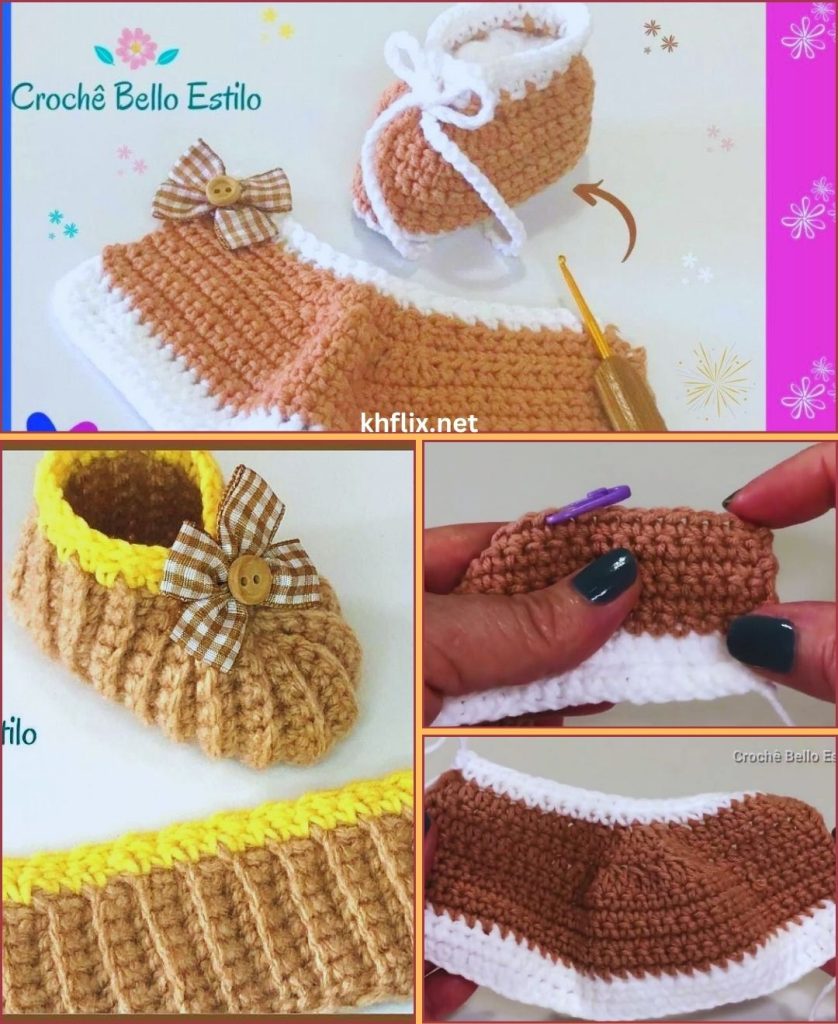
Understanding the Core Technique
Before touching your hook, it’s important to understand the construction.
Every crochet baby shoe using this technique is made in three main stages:
- Oval Sole Construction
- Vertical Wall Formation (Back Loop Turn)
- Toe Shaping with Controlled Decreases
This structured approach makes your shoes look clean and professional — without complicated shaping.
Materials You Will Need
Keep everything soft and baby-safe.
Yarn
- DK (lightweight #3) or soft worsted (#4)
- Acrylic baby yarn or cotton blend
- Approximately 50–80 yards per pair
Soft yarn ensures comfort for delicate baby skin.
Crochet Hook
- 3.5 mm (E) for DK yarn
- 4.0 mm (G) for worsted yarn
Choose a hook that creates firm but flexible fabric.
Tools
- Scissors
- Yarn needle
- Stitch markers (optional but helpful)
- Measuring tape
Size Reference (0–3 Months Example)
For this guide, we will demonstrate 0–3 months size.
- Sole length: 3.5–4 inches
- Foot length: 9–10 cm
To size up later, you’ll simply:
- Add starting chains
- Add increase rounds
Now let’s build the foundation.
Stage 1: Creating the Oval Sole (Foundation Technique)
The sole determines fit, structure, and balance.
Round 1: Building the Base Chain
- Chain 10
- 2 half double crochet (HDC) in 2nd chain from hook
- HDC in next 7 chains
- 5 HDC in last chain
- Rotate work to opposite side of foundation chain
- HDC in next 7 stitches
- 3 HDC in last stitch
- Slip stitch to join
You now have an oval shape.
This oval mimics the natural curve of a baby foot.
Round 2: Increase Round (Shaping the Ends)
- Chain 1
- 2 HDC in first stitch
- 2 HDC in next stitch
- HDC in next 7 stitches
- 2 HDC in next 5 stitches
- HDC in next 7 stitches
- 2 HDC in last 3 stitches
- Slip stitch to join
Lay it flat.
✔ It should not curl
✔ It should not ripple
This balance is key to mastering the technique.
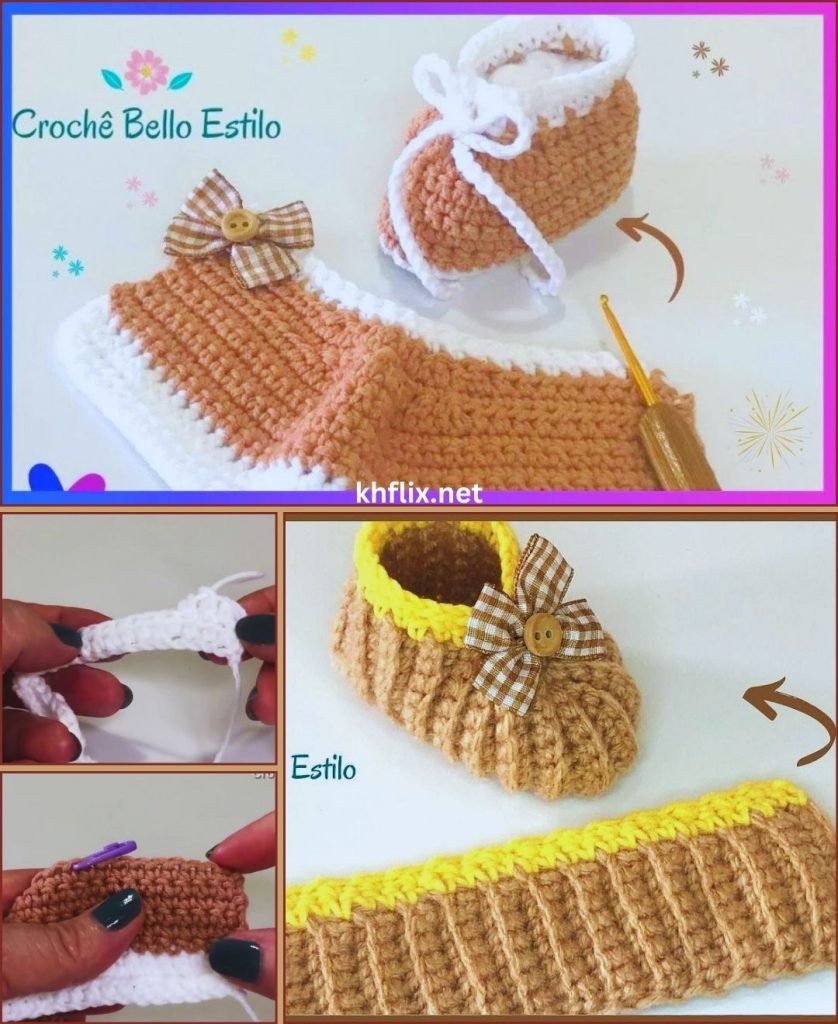
Round 3: Stabilizing Round
- Chain 1
- HDC in each stitch around
- Slip stitch to join
This round strengthens the sole and prepares it for vertical shaping.
Your sole is now complete.
Stage 2: The Back Loop Wall Technique
This is the defining moment of the technique.
Round 4: Back Loop Only Round
- Chain 1
- Single crochet (SC) in BACK LOOP ONLY around
- Slip stitch to join
This creates a ridge at the base and forces the fabric to bend upward.
Instant shoe structure.
This one round changes everything.
Round 5: Building Height
- Chain 1
- SC in each stitch around
- Slip stitch to join
Round 6: Repeat Round 5
Now you will see a small bowl shape forming.
That bowl is your shoe body.
Simple. Clean. Seamless.
Stage 3: Toe Shaping Technique
Now we transform the bowl into a shoe.
This is done with controlled decreases.
Step 1: Locate the Center Front
- Fold shoe in half
- Mark center front stitch
- Count 8–12 stitches across toe area
For 0–3 months, use 10 stitches.
Step 2: First Decrease Round
- SC until you reach toe section
- SC2TOG across toe stitches
- SC to end
- Slip stitch to join
The toe begins closing gently.
Step 3: Second Decrease Round
Repeat the same process.
Now the front looks rounded and polished.
The beauty of this technique lies in gradual shaping rather than harsh decreases.
Optional: Creating a Strap (Elegant Addition)
To secure the shoe:
- Attach yarn at side
- Chain 14–18
- Slip stitch to opposite side
- Fasten off
Add a small button for decoration.
Optional: Decorative Edging
For a professional finish:
- Slip stitch around entire top
- Or add a picot edge
- Or use contrasting yarn
Small details elevate the design.
Adjusting the Technique for Larger Sizes
For 3–6 Months:
- Chain 12
- Add one increase round
For 6–12 Months:
- Chain 14
- Add 1–2 increase rounds
The same structure applies every time.
Advanced Technique Tips
1. Tension Control
Keep stitches slightly firm but not tight.
Too tight = stiff shoe
Too loose = floppy shape
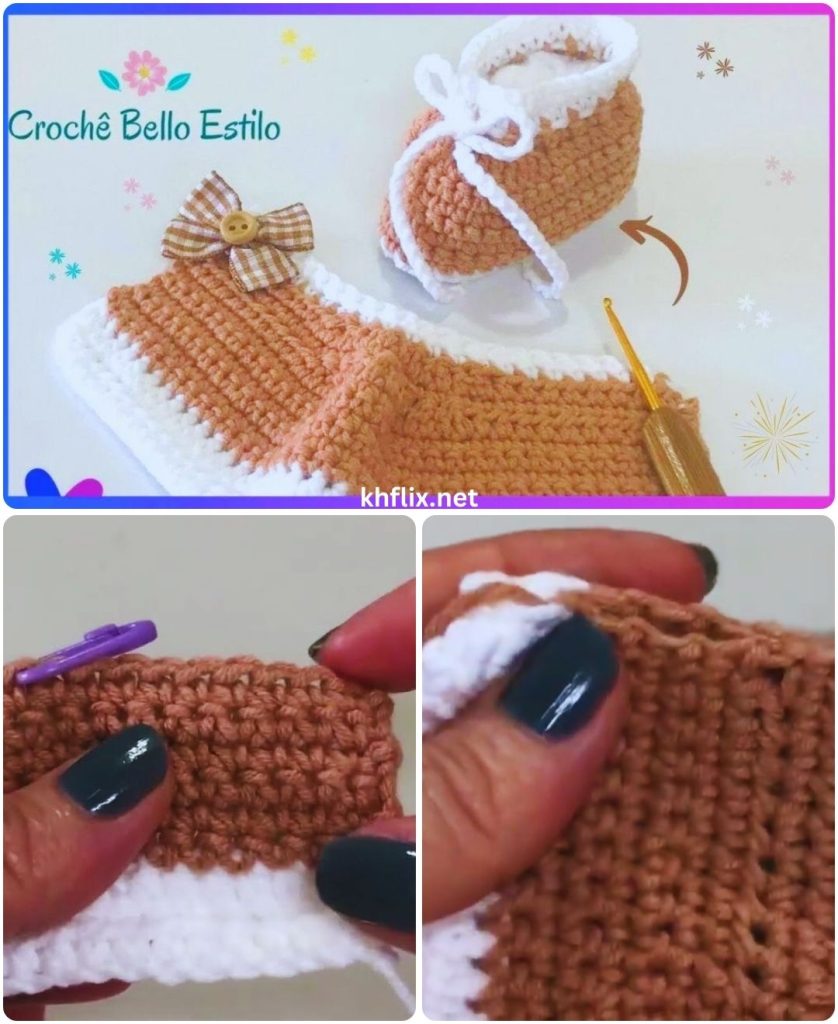
2. Maintain Symmetry
Count stitches carefully.
Uneven toe decreases cause twisting.
3. Make Both Shoes Simultaneously
Complete each round on both shoes before moving forward.
This ensures identical tension.
4. Reinforced Sole Option
For extra durability:
- Crochet two soles
- Stitch together
- Insert thin foam between layers
Perfect for keepsake shoes.
Common Mistakes and Corrections
Sole Curling
Cause: Too few increases
Fix: Add 1–2 increases at curved ends
Sole Ruffling
Cause: Too many increases
Fix: Remove one increase section
Shoe Too Tight
Add one extra wall round
Shoe Too Loose
Add one more toe decrease round
Why This Technique Works So Well
Because it mirrors real shoe construction:
- Flat supportive base
- Vertical structure
- Contoured toe
It avoids sewing multiple pieces.
Everything is built in one continuous flow.
That’s the power of understanding technique rather than memorizing patterns.
Creative Variations Using This Technique
Once mastered, you can create:
- Baby sandals
- Lace-up mini sneakers
- Winter booties
- Mary Jane style shoes
- Ribbed ankle booties
- Two-tone classic slippers
Same structure. Infinite creativity.
Final Thoughts
Crocheting baby shoes becomes easy when you understand the technique behind them.
Remember the structure:
- Oval sole
- Back-loop wall
- Gentle toe decreases
That’s the complete formula.
With practice, your stitches will become smoother, your shaping more elegant, and your shoes more professional-looking.
Handmade baby shoes are not just accessories — they are keepsakes filled with love in every stitch.
If you would like, I can also provide:
- A printable formatted pattern
- A baby sandal variation
- A detailed size chart for all ages
- A lace-up sneaker style
- A winter bootie version
Just tell me which one you’d love next 😊